
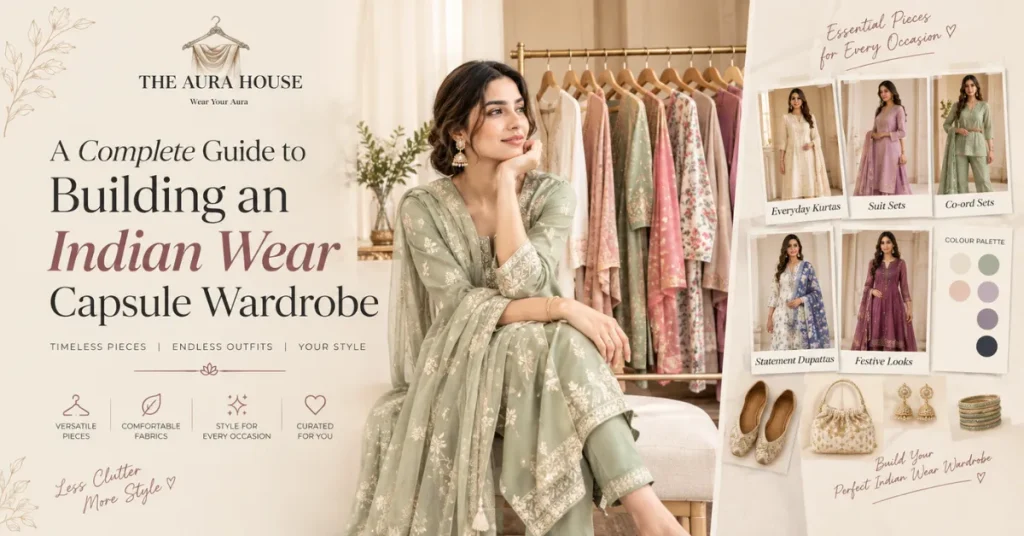
A wardrobe full of clothes does not always mean having the perfect outfit for every occasion. Many women struggle to choose what to wear, even when their cupboards are filled with beautiful ethnic outfits. An Indian wear capsule wardrobe offers a simple solution: a thoughtful collection of versatile pieces that can be mixed and matched.
The idea is to own fewer clothes that work harder for you. With the right essentials, you can create multiple outfits without shopping unnecessarily. Whether you prefer traditional styles or modern ethnic fashion, a well-planned wardrobe makes getting ready simpler and more enjoyable.
1. Understand Your Personal Style
Before shopping for new outfits, understand your personal style and lifestyle. Think about the clothes you feel comfortable wearing and the occasions you dress for regularly.
If you attend college or work, everyday kurtas, straight pants, and comfortable cotton suits may be your priorities. If you frequently attend family gatherings and festive celebrations, you may need embroidered suits and statement dupattas.
Choose pieces that reflect your personality rather than following every fashion trend. Your wardrobe should suit your comfort, budget, and daily routine.
2. Start with Essential Kurtas
Kurtas are among the most versatile pieces in Indian ethnic fashion. They can be styled with different bottoms, footwear, and accessories to create several outfits.
Begin with these essential designs:
– A white or cream kurta for a fresh, timeless look.
– A black or navy kurta for an elegant appearance.
– A pastel kurta for daytime outings.
– A printed kurta for casual occasions.
– An embroidered kurta for festive gatherings.
Choose breathable fabrics such as cotton for everyday wear and richer blends when you want a dressed-up look. These basics form the foundation of an Indian wear capsule wardrobe.
3. Invest in Versatile Bottom Wear
The right bottoms can transform the same kurta into different outfits. Instead of buying matching bottoms for every suit, choose a few versatile options that complement multiple tops.
Straight pants are perfect for everyday styling, while palazzos create a relaxed silhouette. Cigarette pants work beautifully with structured kurtas, and classic leggings are useful for simple daily outfits.
Neutral shades such as white, beige, black, and cream are practical because they pair well with many colours. Before purchasing anything new, check whether it matches at least two or three pieces you already own. This approach helps you build an Indian wear capsule wardrobe without unnecessary spending.
4. Choose a Coordinated Colour Palette
A coordinated colour palette is one of the easiest ways to make your wardrobe more versatile. When your clothes complement one another, creating new combinations becomes effortless.
Start with neutral shades such as white, beige, cream, black, and navy. Then introduce colours you enjoy, such as blush pink, sage green, maroon, mustard, or rust.
For example, a cream kurta can work with white trousers for a minimal look or black trousers for a more defined appearance. Similarly, a rust kurta pairs beautifully with beige bottoms and traditional jewellery.
You do not need to avoid bright colours. Simply select shades that coordinate with your existing collection. A balanced palette makes an Indian wear capsule wardrobe easier to style throughout the year.
5. Add Dupattas That Transform Your Outfits
Dupattas are an important part of Indian ethnic styling because they can completely change the appearance of a simple outfit.
Keep a small selection of versatile dupattas. A lightweight cotton dupatta is suitable for everyday wear, while a printed dupatta adds personality to a plain kurta. An embroidered or zari-work dupatta can make a basic suit look festive.
Experiment with different draping styles to create fresh looks without purchasing new clothes. Pair contrasting colours for a bold appearance or choose similar shades for an elegant outfit. Your Indian wear capsule wardrobe can offer plenty of variety with just a few well-chosen dupattas.
6. Include Festive and Occasion Wear
A practical wardrobe should include outfits for special occasions without becoming overcrowded. You do not need a separate expensive outfit for every celebration.
Keep one or two well-designed suit sets that can be styled differently for festivals, family functions, and dinners. Choose timeless embroidery, flattering cuts, and colours that you enjoy wearing.
You can refresh the same outfit with statement earrings, embellished footwear, a different dupatta, or a new hairstyle. A simple embroidered suit can work for a festive lunch with minimal jewellery and look more glamorous at an evening celebration with heavier accessories.
When planning your Indian wear capsule wardrobe, choose occasion wear that can be restyled for several events.
7. Choose Accessories Wisely
Accessories help you create variety without increasing the number of clothes in your wardrobe. A few carefully selected pieces can make even a simple outfit look thoughtfully styled.
Consider including jhumkas, small stud earrings, bangles, a delicate necklace, and a versatile handbag. Comfortable juttis or neutral sandals can complement several ethnic outfits, while embellished footwear adds a festive touch.
Avoid buying accessories that only match one particular dress. Instead, choose pieces that coordinate with different colours and styles. This keeps your Indian wear capsule wardrobe flexible and budget-friendly.
8. Focus on Quality, Comfort, and Fit
When building a capsule wardrobe, quality matters more than quantity. Clothing that fits well, feels comfortable, and maintains its appearance over time is usually a better investment than an outfit purchased only because it is trending.
Check the fabric, stitching, finishing, and care instructions before buying. Choose cotton for warmer days and richer fabrics for celebrations or cooler evenings.
A well-fitted outfit can look elegant even when its design is simple. Make sure your clothes allow comfortable movement and suit your personal preferences. Prioritising comfort helps you get more use from every purchase.
9. Shop Mindfully and Organise Your Wardrobe
Before shopping, review the clothes you already own. Separate your wardrobe into everyday wear, occasion wear, and seasonal pieces. Identify gaps instead of purchasing similar items repeatedly.
Make a list of essentials and set a budget before visiting stores or shopping online. Ask yourself three questions before buying anything: Does it fit my style? Can I pair it with existing pieces? Will I wear it regularly?
Organise your clothes by category or colour so that outfit combinations are easier to identify. Taking photographs of successful combinations can also help you plan looks quickly.
10. Create Multiple Outfits from Fewer Pieces
The real benefit of a capsule wardrobe is the ability to create different outfits using a limited number of essentials.
For example, one neutral kurta can be paired with straight pants for everyday wear, palazzos for a relaxed look, or an embroidered dupatta for a festive appearance. The same trousers can be combined with printed, solid-coloured, and embroidered kurtas.
Experiment with layering, jewellery, footwear, and dupatta draping. Small styling changes can make familiar clothes feel new again. This is what makes an Indian wear capsule wardrobe a practical choice for busy routines.
Conclusion
Building a stylish ethnic collection is about making thoughtful choices rather than owning an endless number of clothes. By investing in versatile kurtas, comfortable bottoms, coordinated colours, statement dupattas, and timeless accessories, you can create outfits for everyday activities and special occasions.
Start with what you already own, identify the essentials you genuinely need, and shop according to your lifestyle and budget. With a little planning, you can create a wardrobe that is organised, stylish, and practical while expressing your personal style confidently.