
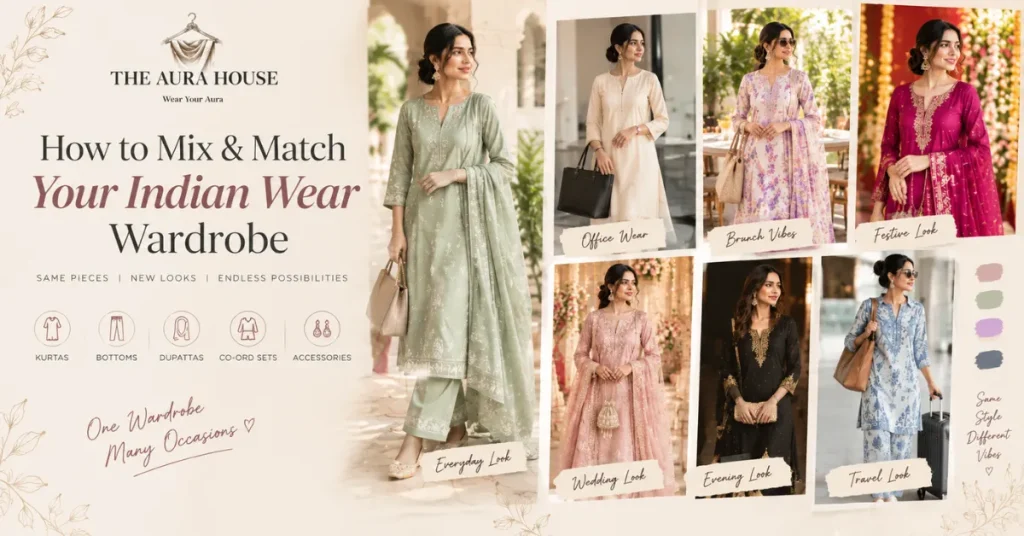
Indian fashion celebrates elegance, tradition, comfort, and individuality. From graceful kurtas and relaxed trousers to colourful dupattas and statement accessories, Indian clothing offers endless ways to create fresh outfits. Looking stylish does not always mean buying something new; often, the best combinations come from pieces you already own.
Learning How to mix and match Indian wear helps you create versatile outfits while making better use of your wardrobe. Whether you are dressing for work, everyday outings, family gatherings, or festive celebrations, thoughtful combinations can make familiar clothing feel new. This guide shares practical ideas about colours, prints, silhouettes, layering, and accessories.
Use this idea whenever you plan a new outfit: How to mix and match Indian wear starts with noticing which pieces already share a colour, fabric, or mood.
1. Start with Versatile Wardrobe Essentials
Choose comfortable clothing in flattering cuts and colours that coordinate easily. A few well-chosen essentials can create many outfits.
Consider keeping these staples:
- Classic kurtas: Solid kurtas in white, black, beige, navy, or pastel shades pair easily with different bottoms.
- Straight pants: These work with short kurtas, long kurtas, tunics, and some contemporary tops.
- Co-ord sets: Wear matching pieces together or separate them to create additional combinations.
Before shopping, check whether a new kurta works with at least two existing pieces. This helps prevent impulse buying.
Keep a few reliable combinations ready, because How to mix and match Indian wear is easier when your wardrobe has versatile basics.
2. Experiment with Different Colour Combinations
Colour can change an outfit completely. Combine complementary shades, soft neutrals, or one bright colour with a quieter tone. How to mix and match Indian wear becomes easier when you understand which colours work well together.
Try combinations such as:
- White and pastel pink: A gentle pairing for brunches, daytime events, and casual outings.
- Black and beige: A polished combination for office wear or an evening get-together.
- Blue and white: A fresh choice for warm weather and everyday styling.
- Green and gold: A festive pairing for celebrations and family gatherings.
- Maroon and cream: A rich yet balanced combination for family functions.
Use one shade as the main colour and let the second support it. Neutrals such as ivory, beige, black, and white balance brighter pieces. Repeat a colour from a printed dupatta in your trousers or accessories for a connected look.
For a balanced result, remember that How to mix and match Indian wear is about coordinating pieces rather than making every item identical.
3. Mix Printed and Solid Pieces
Combining prints with plain clothing creates interest without making an outfit too busy. Pair a bold printed kurta with simple trousers in a shade taken from the pattern. A plain kurta can be styled with printed palazzos or a patterned dupatta.
Wear a floral kurta with white straight pants for daytime, or pair a black kurta with printed palazzos and simple sandals.
When one piece has a bold pattern, keep the rest understated. If combining two prints, look for a shared colour or choose patterns in different sizes.
On busy mornings, How to mix and match Indian wear can mean choosing one familiar kurta and giving it a different bottom or dupatta.
4. Give Your Dupattas a Fresh Styling Approach
A dupatta can transform an outfit. Pair a contrasting one with a plain kurta, or use an embroidered style to make a simple outfit feel special. How to mix and match Indian wear includes using accessories and layers creatively.
Experiment with these draping ideas:
- One-shoulder drape: Let the dupatta fall over one shoulder for an effortless appearance.
- Front drape: Carry it across both shoulders for a traditional and balanced look.
- Open drape: Allow it to flow freely when you want a graceful, relaxed silhouette.
- Belted drape: Secure it with a slim belt to define the waist and add a contemporary touch.
Choose lightweight cotton or chiffon for daytime and silk, organza, or embroidered styles for festive outfits.
When you shop thoughtfully, How to mix and match Indian wear helps each new purchase work harder with clothing you already own.
5. Pair Different Bottom Wear with Your Kurtas
Changing the bottom wear can make the same kurta look different. Straight pants create a neat silhouette, palazzos feel relaxed, and churidars offer a traditional finish.
Try these combinations:
- Short kurta with straight pants for an easy everyday outfit.
- Long kurta with leggings for a simple, streamlined look.
- A-line kurta with palazzo pants for a flowy silhouette.
- Printed kurta with solid trousers to keep the pattern in focus.
- Anarkali kurta with churidar bottoms for a classic occasion outfit.
Balance proportions: pair a voluminous kurta with slimmer bottoms, or a shorter kurta with wider trousers. Choose combinations that let you move comfortably.
Try a new pairing before deciding it will not work; How to mix and match Indian wear often involves experimenting with unexpected combinations.
6. Use Layering to Create Stylish Looks
Layering adds depth. A long shrug creates a relaxed look, an embroidered jacket brings texture to a plain suit, and a short jacket adds structure to a co-ord set.
Choose lightweight layers for everyday wear and heavier fabrics in cooler weather. Balance proportions with structured layers, and choose a simple jacket when your outfit already has bold prints or embroidery.
Your personal style should guide How to mix and match Indian wear, so choose colours and silhouettes that make you feel comfortable.
7. Accessorise Your Outfits Smartly
Accessories express your personality and change an outfit’s mood. Jhumkas add tradition, studs keep it understated, and a statement necklace can highlight a plain kurta.
Think about the occasion when choosing accessories:
- Footwear: Juttis and kolhapuris complement ethnic outfits, while sandals and block heels suit many day-to-evening looks.
- Bags: Potli bags work well for celebrations; structured handbags are practical for everyday use.
- Jewellery: Bangles, delicate chains, and statement earrings can finish an outfit beautifully.
- Belts: A slim belt can define the waist and give a long kurta or dupatta a modern shape.
Avoid wearing every statement piece together. Large earrings pair best with a simple necklace.
With a little planning, How to mix and match Indian wear can make everyday dressing simpler and reduce the need for frequent shopping.
8. Transform Everyday Outfits into Festive Looks
Create a celebration-ready outfit without buying a new ensemble. Start with a simple kurta or co-ord set and add an embroidered dupatta, traditional earrings, embellished footwear, or a metallic clutch.
Choose accessories for the event, but keep comfort in mind.
9. Create Multiple Looks with Indian Co-Ord Sets
Co-ord sets are designed to work together, but you can also separate their pieces and combine them with other clothing.
Wear the kurta with white trousers or style matching bottoms with a contrasting short kurta. Add a different dupatta or jacket for variety. How to mix and match Indian wear makes one co-ord set the starting point for several outfits.
Choose sets in colours and prints that coordinate with your existing wardrobe. This makes it easier to reuse each piece in different ways.
Most importantly, How to mix and match Indian wear should feel enjoyable, allowing you to express your individuality through clothing.
10. Organise Your Wardrobe for Easy Styling
An organised wardrobe makes outfit planning quicker. Arrange kurtas, trousers, dupattas, co-ord sets, and occasion wear separately. Grouping by colour or fabric also helps you spot combinations.
Photograph outfits you like and save them on your phone for busy mornings. Before buying anything new, check whether it works with two or three pieces you own.
Conclusion
Stylish outfits do not require a huge wardrobe or constant shopping. Refresh familiar clothing with colours, prints, different bottoms, dupattas, and thoughtful accessories.
The best approach to How to mix and match Indian wear is to focus on versatility, comfort, and personal taste. Start with pieces you love, try new combinations, and build outfits for everyday life and special occasions.
At The Aura House, we believe Indian fashion should celebrate individuality and timeless traditions. Explore your wardrobe with fresh eyes, enjoy styling, and let every combination reflect your unique aura.